
Select the coating system around the real process
A spin coater spreads photoresist or another liquid material across a rotating substrate. Machine selection should therefore consider substrate diameter and shape, thickness and weight, liquid viscosity, target film thickness, dispensing method, edge bead removal and the required level of automation—not rotational speed alone.
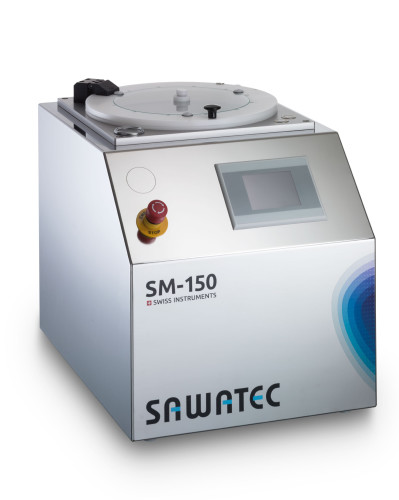
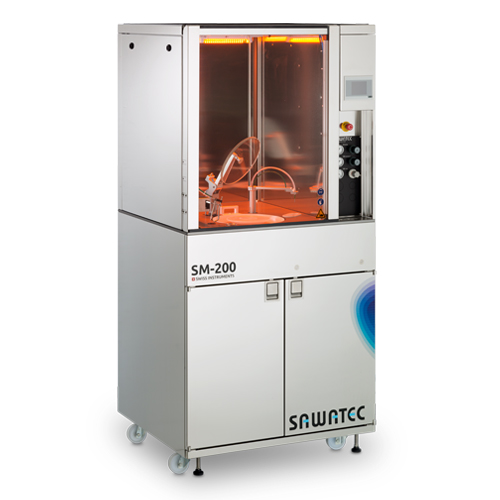
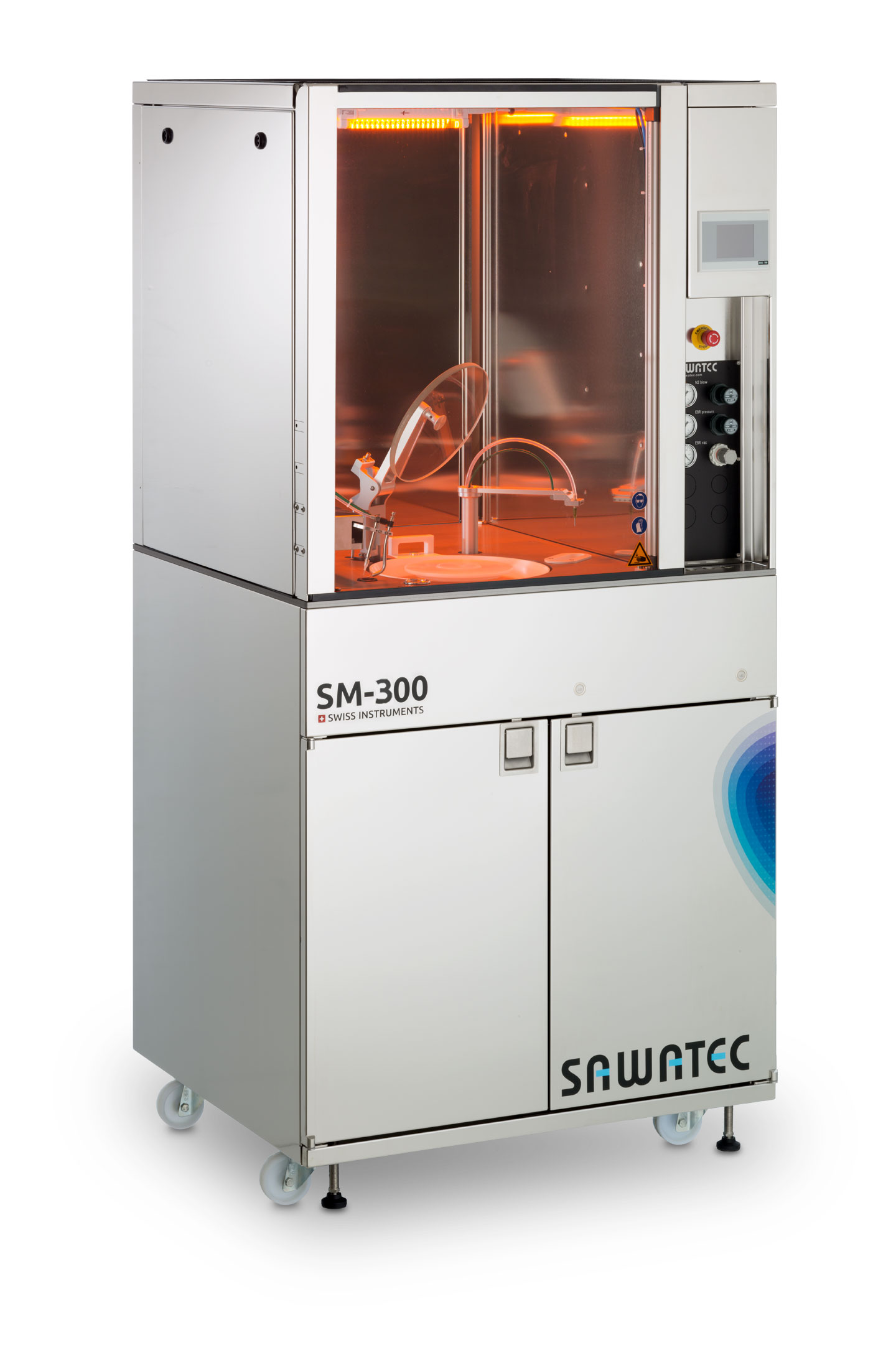
SM Series comparison
| Model | Substrate range | Speed range | Configuration and use |
|---|---|---|---|
| SM-150 | Up to 150 mm wafers or 127 × 127 mm substrates | 0–10,000 rpm; nominal accuracy ±1 rpm | Manual coating; portable bench-top or table installation options |
| SM-200 | Up to 200 mm wafers or 150 × 150 mm substrates | 1–6,000 rpm; nominal accuracy ±1 rpm | SAWATEC SM-200 is a semi-automatic spin coater for applying photoresist films in laboratory and process development work on wafers up to 200 mm or square substrates up to 150 × 150 mm. It features an RCCT chamber, a dynamic dispense arm and multiple liquid-line options. See SAWATEC SM-200 manufacturer specifications. Shanghai Jiao Tong University lists the same model as a semi-automatic spin coater. Shanghai Jiao Tong University SM-200 equipment record. |
| SM-300 | Up to 300 mm wafers or 200 × 200 mm substrates | 1–6,000 rpm; nominal accuracy ±1 rpm | SAWATEC SM-300 is a semi-automatic spin coater for applying photoresist films during process development on wafers up to 300 mm (12 inches) or square substrates up to 200 × 200 mm. It features an RCCT system and can be installed in a mobile cabinet or on a table. See SAWATEC SM-300 manufacturer specifications. |
| SM-600 | Up to 600 mm round substrates or 16 × 16 inch substrates | Confirmed for the substrate and chuck configuration | Semi-automated coating of large substrates |
| SM-900 | Up to Ø900 mm or 600 × 600 mm substrates | Confirmed for the substrate and chuck configuration | Very large round or square substrates |
Five inputs needed for a useful configuration
Substrate
Diameter or length and width, thickness, weight, surface topography and the required chuck method.
Coating material
Material type and viscosity, target film thickness and relevant supplier process guidance.
Dispensing
Static or dynamic dispense, number of liquids, line materials and cleaning requirements.
Edge and backside
Whether edge bead removal, backside rinse or needle cleaning should be included.
Automation path
Manual R&D, repeatable semi-automation, or future integration with hotplates, developers and robotic handling.
When spray coating is the better route
Conventional spin coating is best suited to flat substrates or surfaces with very low topography. Deep cavities, high steps, vertical sidewalls and complex 3D structures should be evaluated against a spray coating process rather than addressed by rotational speed alone.
Discuss the substrate before selecting the machine
Send the substrate drawing, material viscosity, target film thickness, expected throughput and automation requirements. The SAWATEC team can then narrow the SM model and configuration without treating a base machine as a complete process solution.